

METHODOLOGY.
THE PHILOSOPHY.
Design is the answer to everyday challenges — a creative solution shaped around understanding, purpose and experience.
I believe the strongest solutions should be ‘quietly loud’.
Bold in their thinking, comprehensive in their response, yet quiet in how they exist within the world.
They solve problems holistically without demanding attention, integrating seamlessly into familiar experiences and adapting naturally to daily routines.
“Design answers through a delivery of enhanced emotional and memorable experiences.”
The best design is not always noticed for what it is, but for what it enables — removing friction, improving interaction and making once-familiar problems feel as though they never existed.
Loud in thought. Quiet in experience.
THE FOUNDATIONS.
WHAT?
BY 3 FUNDEMENTAL PRINCPLES
HOLISTIC DESIGN
Inclusively and consciously harmonizing a diverse set of factors, ranging from ergonomics, aesthetics and interaction to sustainability, ecosystems and life cycle.
DESIRABLE DESIGN
Sensitively crafting attractive design through an articulate composition of design elements and visual grammar for both the end user(s) and environment.
PURPOSEFUL DESIGN
Ensuring a design or experience can perform with a genuinely sought purpose and can positively impact/influence the end user through its existence.
+
HOW?
WITH 3 DRIVING FORCES
VISUAL GRAMMAR
The assortment of design elements, composed in a ‘grammatically’ correct fashion, to ensure a design is attractive, adaptive and engaging.
USER-CENTRIC
The exploration, analysis and findings of product user-case scenarios and user expectations to ensure a product has been designed with intent.
PRODUCT INTERACTION
Satisfying product performance achieved through the implementation of haptic features and functions to create memorable experience.
+
WHY?
FOR 3 MAJOR FACTORS
FOR WORLD/HUMAN NEED
Create a new or improved product/experience with an absolute intention of positively impacting human day to day lifestyles and the planet.
FOR A CIRCULAR ECONOMY
Create a new or improved product/experience with circular design principles in mind and build intentionally for a circular life cycle, rather than linear.
FOR A BETTER EXPERIENCE
Modify, adjust and improve pre-existing products with an absolute intention of enhancing user-product experience and amplify emotional attachment.
↓
↓
THE FRAMEWORK.
SUCCESSFUL DESIGN IS A PROVEN RESULT OF STRATEGIC DESIGN THINKING AND SYSTEMATIC PROCESS.
UNDERSTAND
DEVELOP
REALISE
↓
↓
↓
Establish the opportunity, brief, objectives and project parameters.
Question the brief through research, users, market and context.
Understand new technology, materials, manufacturing, competition and constraints.
Explore, generate and visualise a broad range of potential solutions.
Develop promising concepts into differentiated products, systems and experiences.
Test prototypes, evaluate and progressively refine the design.
Engineer and prepare the product for manufacture, assembly and scale.
Transition the developed product into production, supply chain and market.
Validate, test and verify the final product against requirements.
Launch, deliver and establish the product in its intended market.
↓
↓
↓
↓
THE PROCESS.
A stage-gate approach enables step-by-step focus and conscious decision making that drives project milestones to be accomplished smoothly.


- Product Vision & Future Scope Planning
- Function & Performance Requirements
- Ergonomic Requirements
- Feature List (MVP Prioritization)
- Safety & Regulatory Considerations
- Durability & Lifespan Expectations

PHASE 03:


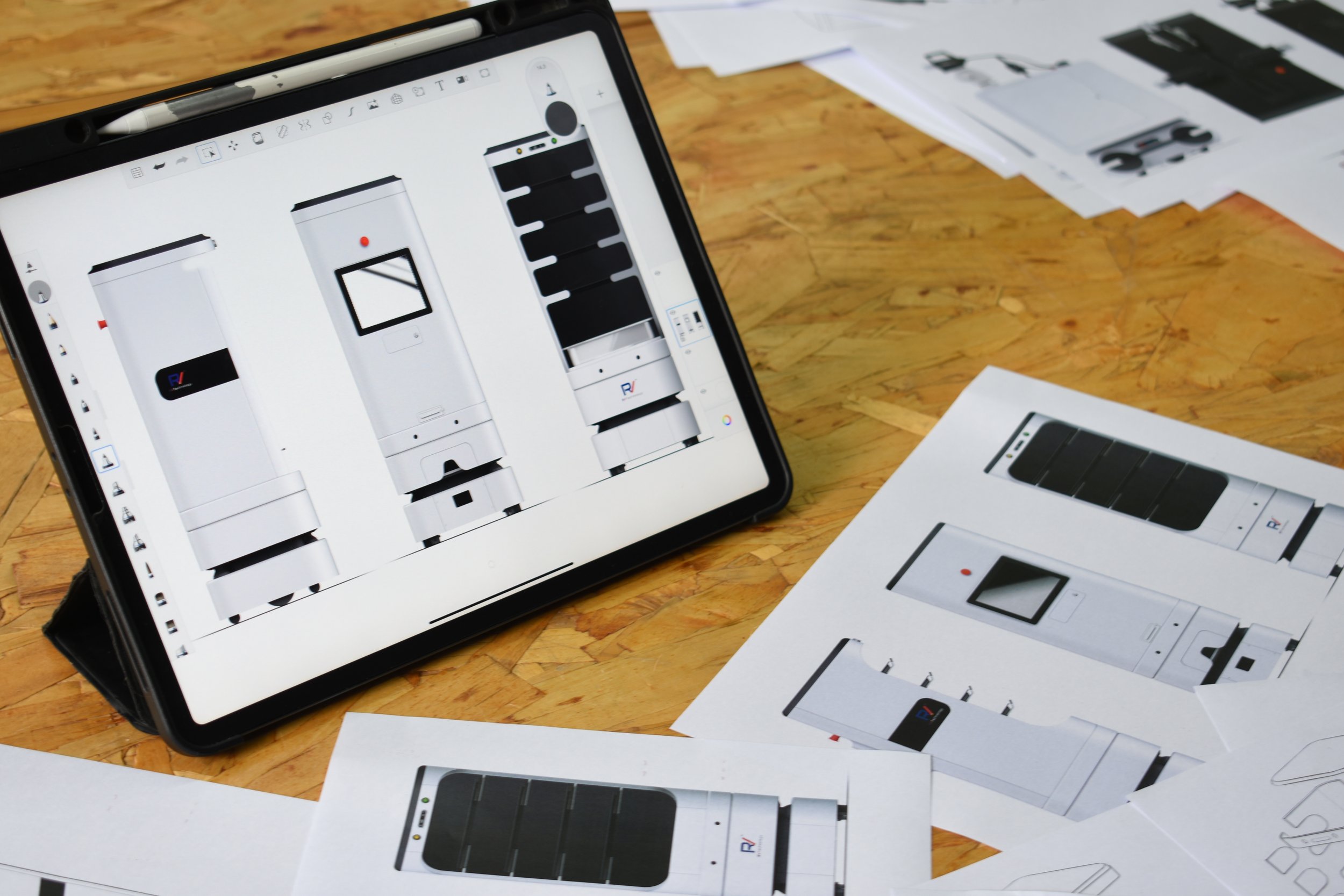
Letting pen and paper do the talking, via blue-cloud brainstorming sessions and workshops, where creative solutions and innovative ideas are crafted in the form of aesthetically pleasing concepts.
PHASE 05:
PHASE 02:
PRODUCT SPEC DEFINITION
Adding definition to the brief, selecting practical and tailored specs (PDS) which determine what the product should do, how it could appear and how it must perform for its user and environment.

IDEATION & CONCEPT DESIGN
- Brainstorming / Workshop
- Concept Generation
- Ergonomic Consideration
- Morphological Comparison & Screening
PHASE 01:

PHASE 04:
DESIGN REFINEMENT & DETAILING
Once a preferred concept (or more) has been chosen, design details are refined, tweaked and amended, where all aspects and elements come together harmoniously for shareholder and user verification.
- CMF Selection
- 2D Concept Visualization
- Feature & Functionality Detailing
- Assembly & Disassembly Consideration
- Circularity Implementation


3D CAD DESIGN & DEVELOPMENT
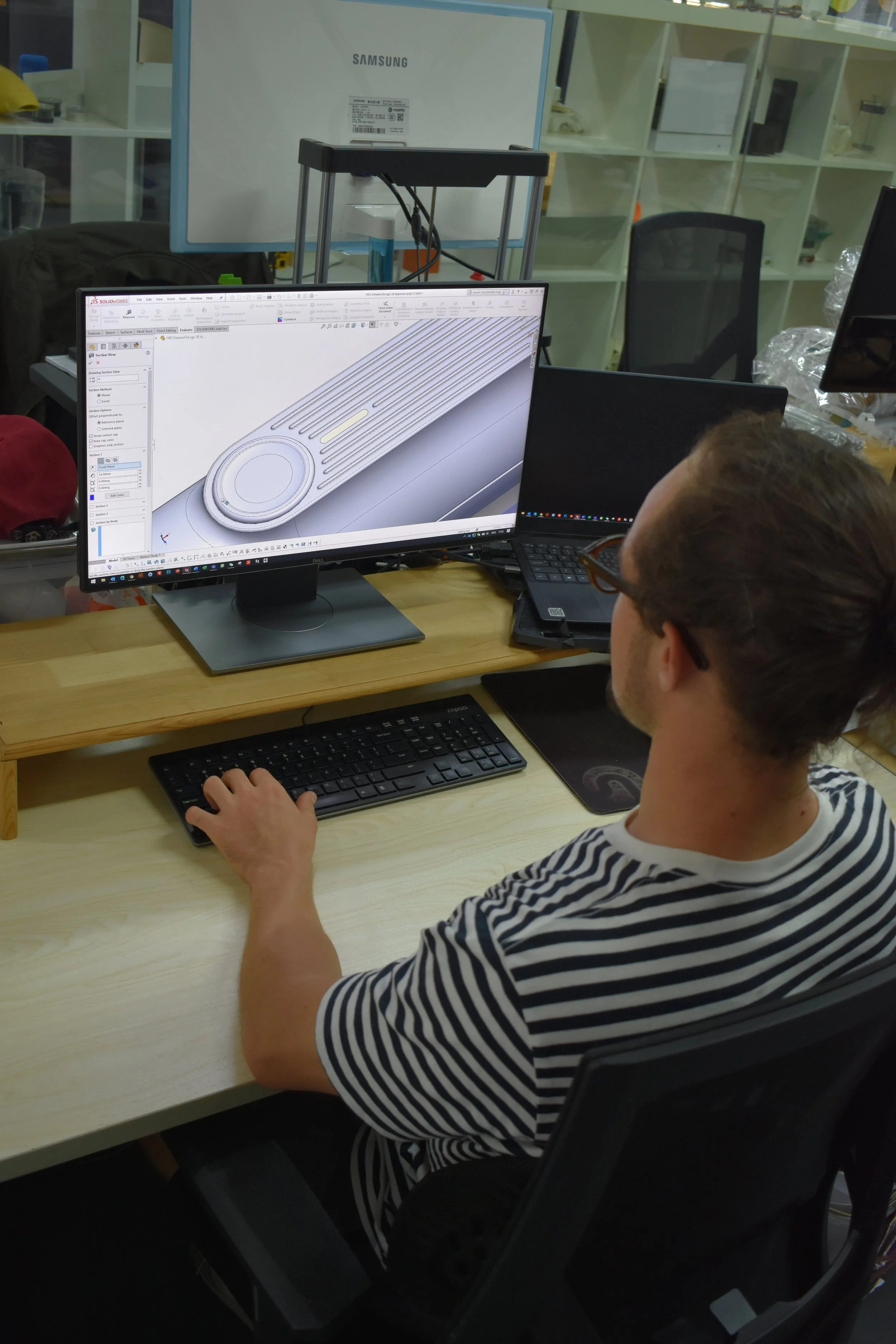
Using 3D CAD software, the design begins its transformation from 2D into 3D space. Form, proportion and dimension are defined through the development of A-class outer surfaces and internal structure.
- 3D Outer Shape CAD Generation
- Inner Construction & Component Mapping
- Assembly & Disassembly Implementation
- BOM Documentation
- Anatomy Mock-Ups & Testing

PHASE 06:
PROTOTYPING & TESTING
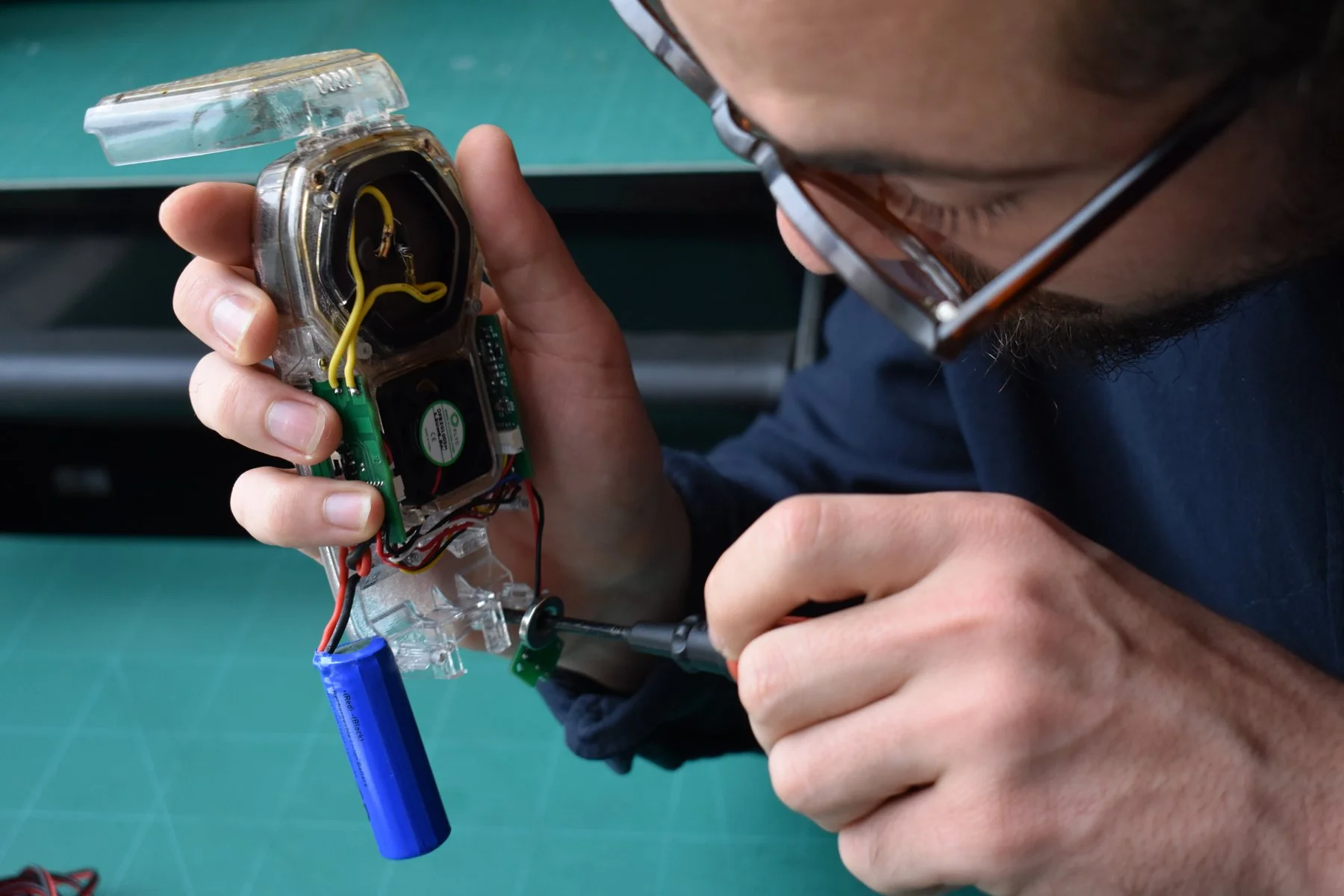
Creating fully functional and high-fidelity physical prototypes via hand modelling, 3D printing or CNC milling to rapidly test a range of essential product aspects against the product specification document.
- Feature & Functionality Testing
- Aesthetic & Cosmetic Value Testing
- Proportion & Ergonomic Testing
- Fit, Tolerance & Assembly Testing
PHASE 07:
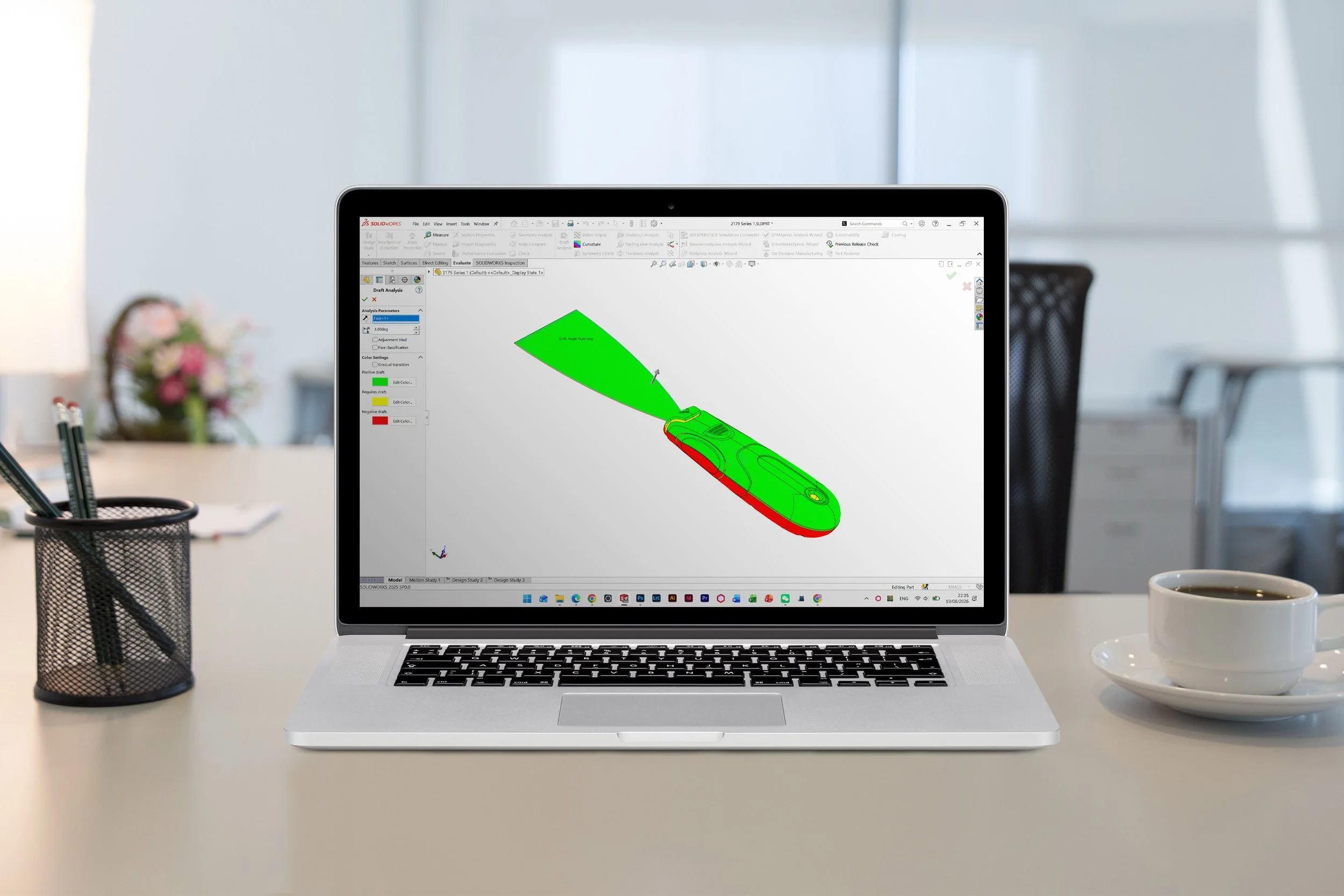
DFM & DFMA ASSESSMENT
Reviewing existing CAD, drawings and tech packages to assess manufacturability and assembly readiness. Identifying challenges and providing practical recommendations for improvement before manufacture commitment.
- Geometry & Tolerance Review (Draft Angle, Wall thickness etc.)
- Part Fitment & Assembly Sequence Review
- Optimization & Simplification Assessment (Part Count, Cost etc)
- Risk Flagging & Improvement Opportunity Feedback
- Surface Finish Feasibility Review


PHASE 08:
REFINEMENT & FOLLOW UP
After physical interaction with the design, new challenges, issues or improvements may arise that need to be further implemented. A final round of design refinement and adjustment takes place to ensure the product is ready for mass production and end use.
- Manufacture Liaison
- Tooling Setup
- Golden Sample Approval & Testing
- Quality Control & Standards
- Packaging Design & Marketing Visuals
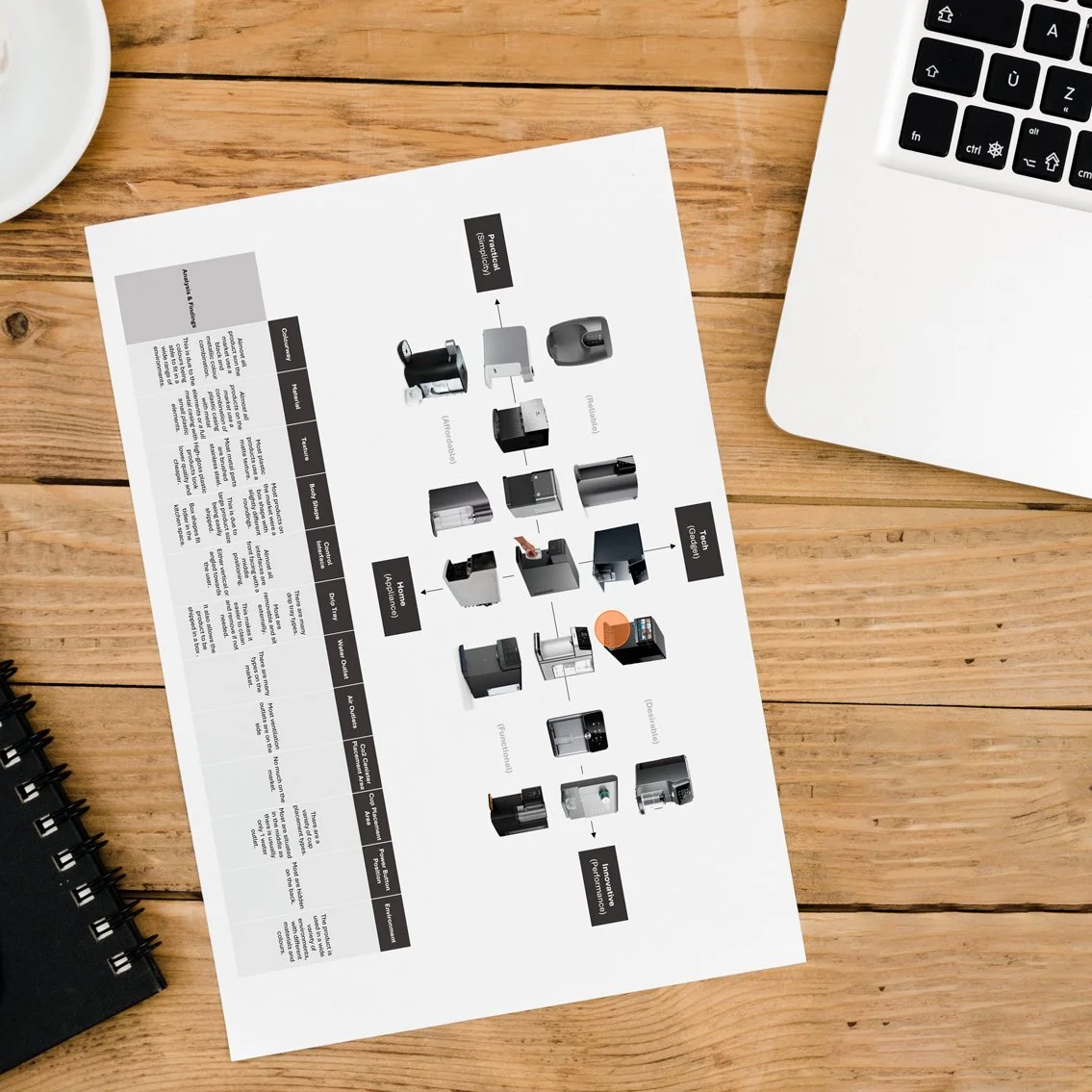
RESEARCH & DIRECTION
Establishing what should be designed, why it matters and where the opportunity lies.
- Competitor Benchmarking & Market Assessment
- Product Roadmapping
- User Case Scenario & Pain Point Analysis
- Feasibility Studies
- Opportunity Identification
- Landscape Positioning
- Trend Analysis
- Product Breakdowns